
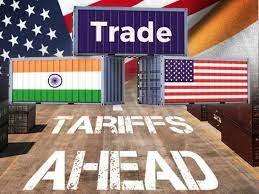
1. Trump’s Tariffs and Their Impact on India’s Economy
In an effort to protect U.S. industries, the Trump administration imposed a series of tariffs on imports from countries like India. The U.S. placed a 25% tariff on steel and a 10% tariff on aluminum, which significantly affected India’s exports in these sectors. Additionally, Indian agricultural products, like mangoes and seafood, faced a 25% tariff. These tariffs increased the cost of exporting these goods to the U.S., causing higher prices for both U.S. consumers and Indian businesses that rely on these exports. As a result, India experienced financial strain, especially in industries like steel, aluminum, and agriculture.
India responded by imposing retaliatory tariffs on U.S. products, with a 20-50% increase on goods like motorcycles, almonds, and apples. This led to a significant trade imbalance and growing tensions between the two nations.
2. India Seeks New Markets and Negotiations with U.S.
Faced with these tariffs, India has been actively seeking alternative markets for its steel, aluminum, and agricultural products. Countries like China, Japan, and the European Union have become more prominent trade destinations as India looks to reduce its dependence on the U.S. market. In addition to exploring new markets, India has engaged in high-level discussions with the U.S. to address the tariffs and restore balanced trade relations.
U.S. and Indian officials are now negotiating for a potential tariff reduction, hoping to ease trade barriers. Both sides are looking for a solution that will benefit their economies and promote a fairer trade environment. However, with the U.S. holding firm on its stance, these negotiations are ongoing and may take time to bear fruit.
3. India’s Strategic Response to the Tariffs
India’s government has taken several strategic actions to minimize the impact of U.S. tariffs. It imposed its own retaliatory tariffs, with rates ranging from 20% to 50% on U.S. goods, such as agricultural products and motorcycles. The Indian Ministry of Commerce also approached global forums like the World Trade Organization (WTO) to seek relief from these unilateral tariffs.
Indian businesses have been trying to adapt to the situation by exploring new markets. For example, steel manufacturers have been seeking alternative buyers in Southeast Asia and Europe to offset the losses in the U.S. market. Agricultural exporters are also looking towards new regions like the Middle East and Southeast Asia to expand their customer base.
In the face of these challenges, India has also been encouraging domestic industries to innovate and enhance competitiveness. Government incentives are being offered to boost the production of key exports, particularly in the steel and agriculture sectors.
4. Future Outlook: U.S.-India Trade Relations at a Crossroads
The future of trade relations between the U.S. and India largely depends on the political landscape in the U.S. The upcoming U.S. elections may play a pivotal role in determining whether these tariffs will remain or be reduced. A new administration could potentially soften the stance on trade, but if the tariffs persist, India may further diversify its export strategy, focusing less on the U.S. market.
India is already looking at ways to reduce its reliance on the U.S., diversifying into new markets and enhancing its trade ties with countries like Japan, the EU, and others in the Asia-Pacific region. Additionally, India is exploring collaborations in non-tariff areas like technology, renewable energy, and healthcare, which could serve as new avenues for growth.
Both nations may find common ground in these sectors, reducing trade tensions in the long term. The emphasis could shift towards creating mutually beneficial partnerships rather than focusing solely on trade deficits.
Additional Key Points on Tariff Impact:
Steel Tariff: 25% on Indian steel exports to the U.S.
Aluminum Tariff: 10% on Indian aluminum exports to the U.S.
Agricultural Products: 25% tariff on Indian mangoes, seafood, and other agricultural exports.
Retaliatory Tariffs: India imposed tariffs between 20%-50% on various U.S. goods like motorcycles, apples, and almonds.
Indian Diversification: Efforts to seek new markets in China, Japan, EU, and Southeast Asia to offset U.S. trade losses.

Leave a Reply